
Reviews · 8 min read
5 Best Backlink Marketplaces in 2026 (Ranked & Tested)
Updated On: February 12, 2026
Backlinks haven’t lost their power. What changed is how hard it has become to find ones that actually help instead of quietly damaging your site. The market is crowded, confusing, and full of recycled promises. How do you distinguish the platforms that deliver from the ones that only look busy? We reviewed dozens of backlink marketplaces with one goal in mind: filter out the noise and surface the services that produce links you can trust.
You need to know:
- Collaborator delivers verified placements with full visibility into domains and metrics.
- Bazoom is the go-to option for anyone targeting Scandinavia and localized European audiences.
- Presswhizz focuses on brand-led placements.
- Link Publishers works well for teams that require a high volume of links.
- WhitePress is built for international campaigns.
Methodology: How We Chose the Best Backlink Marketplaces
Before adding any platform to this list, we didn’t rely solely on marketing pages or feature lists. We tested interfaces, checked real publisher catalogs, compared pricing models, and paid close attention to how transparent each service was once you actually tried to place a link. Some marketplaces looked good on the surface and fell apart the moment you clicked deeper. Others were quietly impressed with clarity, structure, and consistency.
We also paid attention to user experience. Not just how easy it is to place an order, but how much control you really get. You can tell a lot about a platform by how much it shows upfront and how much it hides behind “contact support” buttons. After comparing dozens of options, we narrowed this list down to platforms that deliver what they promise.
Here are the main factors we used to evaluate every marketplace:
- Publisher transparency. You should always see real domains before you pay.
- Traffic and metrics verification. Data must come from trusted sources, not estimates or vague labels.
- Editorial quality. Sites should publish real content, not recycled pages built only for links.
- Refund and replacement policy. A platform should protect you when a link fails or disappears.
- Filtering and search control. You need enough filters to match links to your niche and region.
- Ease of workflow. From checkout to approval, the process should make sense without tutorials.
- User feedback. Reviews often reveal problems that sales pages never mention.
If a marketplace failed at even one of these points, it didn’t make the cut. This list only includes platforms that passed real-world testing and didn’t fall apart under scrutiny.
The Best Backlink Marketplaces in 2026
Now it’s time to look closer. Below, you’ll find a detailed breakdown of each marketplace. Some focus on scale, some on authority, others on regional reach, but each one plays a different role depending on what you’re trying to achieve with your SEO.
Collaborator
G2 Review: 4.8/5 (26 reviews)
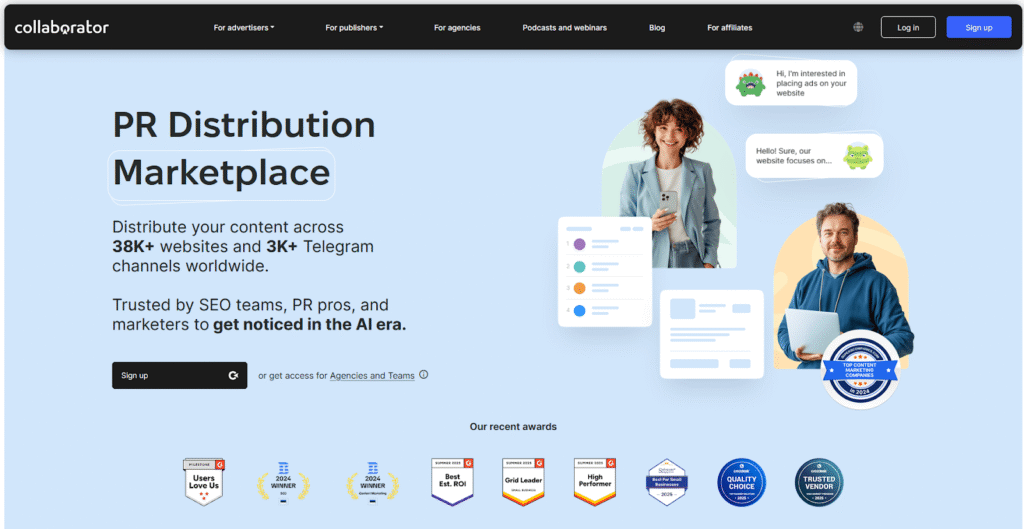
If there’s one marketplace that consistently gets right what others only promise, it’s Collaborator. The platform does not feel like a blind exchange where you “hope” the site is real. You see the full domain list, metrics, prices, and conditions upfront. This makes it much closer to a professional outreach workspace than a traditional backlink shop.
Collaborator works like a direct bridge between advertisers and publishers: you choose the site yourself, send content through the platform, and track publication without leaving the interface.
Best for: SEO teams, agencies, and brands that want full visibility, real sites, and controlled placements.
Collaborator Features:
- Official Ahrefs integration with live DR and traffic data.
- Over 38,000 websites and 3,000+ Telegram channels worldwide.
- 40+ advanced filters: niche, language, geo, traffic, homepage placement, price, turnaround time.
- Direct messaging with publishers inside the platform.
- Placement insurance and refund protection.
- Transparent pricing with no hidden platform fees.
- Exclusive publishers available only through Collaborator.
- Manual moderation and quality checks on publisher accounts.
- Built-in brief system for instructions and deadlines.
- Publication tracking and link status monitoring.
Pros:
- You always see the real domain before paying.
- One of the most detailed filtering systems in the industry.
- A strong mix of authoritative media and niche-focused sites.
- Clear rules, guarantees, and fast publisher responses.
Cons:
- The wide filter system may take some time to explore at first.
- High-demand publishers sell out quickly during busy periods.
Pricing:
Collaborator uses a pay-per-placement model. Typical prices start around $50–$60 per article and scale upward based on domain authority, traffic volume, and placement type. Premium publishers with strong traffic and brand recognition naturally cost more.
What Are the Users Saying?
“What I like most is how easy it is to find real, high-quality sites for link building. The catalog gives clear data on domain metrics, prices, and audience relevance. I also like that everything is transparent, so I know exactly what I’m paying for. It saves me time and helps me plan my content placements more strategically”.
Bazoom
G2 Review: 4.6/5 (26 reviews)
Best for: Companies targeting Scandinavian or Nordic audiences.
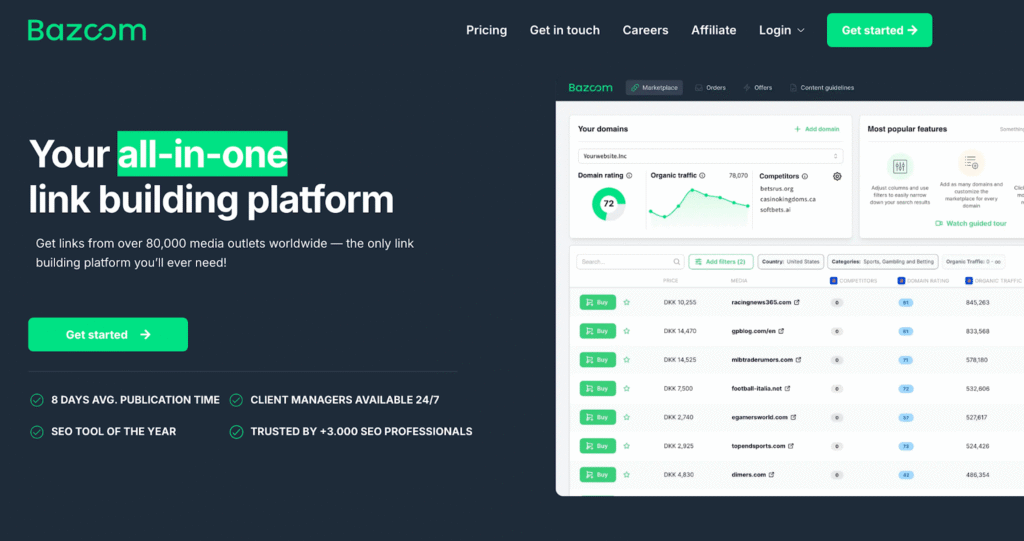
Bazoom isn’t global, and doesn’t try to be. Instead, it does one thing well: Nordic visibility.
Key features:
- Strong focus on Denmark, Sweden, Norway, and Finland.
- Regional publisher selection.
- Local editorial placements.
- Simple comparisons by price and DR.
Pros:
- Excellent regional relevance.
- Clean, easy dashboard.
Cons:
- Limited outside Northern Europe.
- Smaller catalog than international platforms.
Pricing: Mid-range, depending heavily on market and domain authority.
What are users saying?
“Friendly interface, I found out how all works in the first few days. Basically, fair prices, actual notes, and info for every site. The rate of rejections from webmasters is pretty low. And in general, the support team is always in touch and ready to help. Links go live very fast, and they always pay attention to clients’ needs and requests. Bazoom is perfectly good if you need a huge batch of links. Keep it up, guys!”
Presswhizz
G2 Review: no public rating
Best for: Brands that care more about visibility in media than raw DR numbers.
Presswhizz feels much closer to a PR desk than an SEO dashboard. You don’t just “buy links” here. You pitch stories, placements, and mentions to editors who actually publish for real audiences.
Key features:
- Access to real media outlets and editorial platforms.
- PR-style placements instead of generic guest posts.
- Topic and geo-based filtering.
- Manual editorial review before publication.
Pros:
- Excellent for brand exposure and credibility.
- Strong media presence across niches.
Cons:
- Smaller database than SEO-focused marketplaces.
- Not designed for fast bulk link building.
Pricing:
Expect media-level pricing. News mentions and editorial links usually cost more than standard backlinks.
What are users saying?
“Great option when you want people to actually read your content, not just link to it.”
Link Publishers
G2 Review: 5/5 (1 review)
Best for: Teams that need volume without blowing the budget.
Link Publishers is about scale. It doesn’t pretend to be premium PR and that’s exactly why some agencies rely on it for ongoing link pipelines.
Key features:
- Large selection of budget-friendly publishers.
- Filters by niche, DR, and country.
- Option to order content with placement.
- Simple order management.
Pros:
- Affordable for long-term campaigns.
- Wide range of publishers across industries.
Cons:
- Quality varies between listings.
- Fewer authority-level publications.
Pricing:
Among the lowest on the market. You’ll find links from very cheap to mid-tier pricing.
What are users saying?
“Their publisher management team is awesome. They quickly help with any order queries.”
WhitePress
Trustpilot Review: 4.1/5 (36 reviews)
Best for: International campaigns and multilingual outreach.
WhitePress shines when geography matters. It’s especially strong across Europe and works well for brands that want presence beyond English-speaking markets.
Key features:
- Database of over 40,000 publishers.
- Multi-language content distribution.
- Local filters for markets and regions.
- Publisher metrics and profiles.
Pros:
- Powerful for cross-border SEO.
- Deep European coverage.
Cons:
- Some listings require manual vetting.
- Interface can feel overwhelming with scale.
Pricing:
Ranges from affordable local blogs to expensive authority news outlets.
What are users saying?
“Perfect when your SEO roadmap goes beyond one country.”
What’s the Best Backlink Marketplace? Our Verdict
If you’re choosing a marketplace only by price, you’re already putting your budget at risk. The platforms we reviewed prove one thing: the real difference is control. The marketplaces that actually work give you visibility into where your links go, how sites perform, and what happens if something goes wrong after publication. Here’s what truly separates a strong backlink marketplace from a disposable one.
What to look for in a reliable marketplace?
- Full domain transparency. You should always see the exact website before you buy.
- Verified SEO data. Trust platforms that pull metrics directly from tools like Ahrefs, Google Search Console, or similar sources.
- Quality filtering options. The more filters you have, the easier it is to avoid junk domains.
- Placement protection. Links disappear. Pages get deleted. Good platforms take responsibility and offer replacements or refunds.
- Publisher accountability. You should know who you’re working with and be able to evaluate them based on reviews, history, and performance.
- Tracking after publication. A link is only useful if it stays live, indexed, and visible.
What to avoid (even if the price looks tempting):
- Hidden websites.
- “Too cheap for the DR” offers.
- No refund policy.
- No review system.
- Zero data verification.
- Platforms that resell the same inventory.
After evaluating all platforms side-by-side, one thing becomes clear: not all marketplaces are built for long-term SEO. Some focus on volume. Some lean toward PR exposure. Others work well in specific regions. But if you want a platform where you see what you buy, control where you’re published, verify performance, and stay protected after launch, one solution describes that model best: Collaborator.
Unlike most marketplaces, Collaborator doesn’t hide domains, doesn’t guess traffic, and doesn’t leave you alone when something breaks. It combines verified metrics, strong filtering, direct publisher access, and placement protection in one system, which is exactly what link building in 2026 requires.
Conclusion
Let’s sum everything up! Backlink marketplaces can either become your growth shortcut or a quiet budget drain. The difference is in how carefully you choose where your links come from. The best platforms give you visibility into real sites. When you focus on transparency, relevance, and publisher quality, links stop being a gamble and start acting like a stable asset for your rankings.
FAQ
Is buying backlinks safe in 2026?
It can be if you choose marketplaces with real publishers and strong quality control.
How do backlink marketplaces differ from link-building agencies?
Marketplaces give you direct access to publishers and prices. Agencies handle everything for you, but often charge more and hide where your links come from.
How many backlinks should you buy each month?
There’s no perfect number. Sites in competitive niches may need steady monthly placements, while smaller projects grow with fewer links.
What’s the biggest mistake people make when buying links?
Chasing cheap “high-DR” sites without checking traffic or content. A strong metric means nothing if real users never visit the site.
How can you avoid Google penalties when buying links?
Stick to real websites, natural anchor text, and relevant placements. Avoid networks, spun content, and anything that promises rankings overnight.
