
SEO GUIDES · 8 min read
SEO Analytics in 2026: Top SEO Metrics to Track (+How to Improve Them)
Updated On: January, 2026
SEO analytics in 2026 is less about volume metrics and more about signal quality. Rankings still matter, but they are no longer sufficient. Search engines now evaluate topical authority, user engagement, brand signals, and AI-driven relevance.
This guide breaks down the SEO metrics that actually reflect performance today, explains what each metric tells you, and outlines concrete ways to improve them.
SEO analytics now serves three audiences at once: traditional search engines, AI-driven answer systems, and users. This shifts measurement away from isolated keywords toward page-level and entity-level performance.
Key shifts:
- Page performance > keyword position
- Engagement quality > raw traffic
- Brand and topical signals > backlink volume
- Search Console data > third-party rank trackers
Why it matters in 2026:
Search engines downweight low-intent traffic. Pages that attract irrelevant visits but fail to satisfy intent lose visibility.
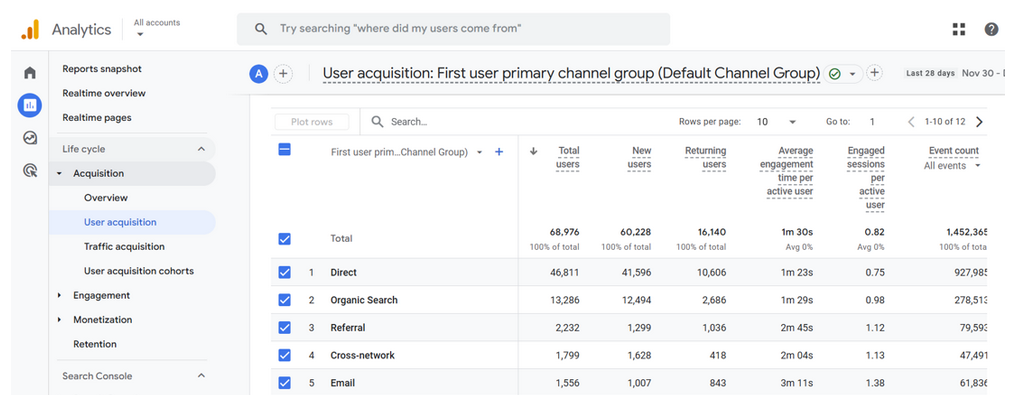
Screenshot from Google Analytics, January 2025
How to improve it:
- Align content with specific search intent (informational, commercial, navigational)
- Remove or merge pages ranking for overlapping queries
- Update outdated pages instead of publishing new ones
- Optimize titles and descriptions for intent clarity, not clickbait
What to watch:
Segment organic traffic by landing page and query group, not site-wide totals.
Click-Through Rate (CTR) from Search
What it measures:
The percentage of impressions that turn into clicks.
Why it matters in 2026:
CTR is a feedback signal. If users repeatedly ignore your result, visibility erodes even if rankings remain stable.
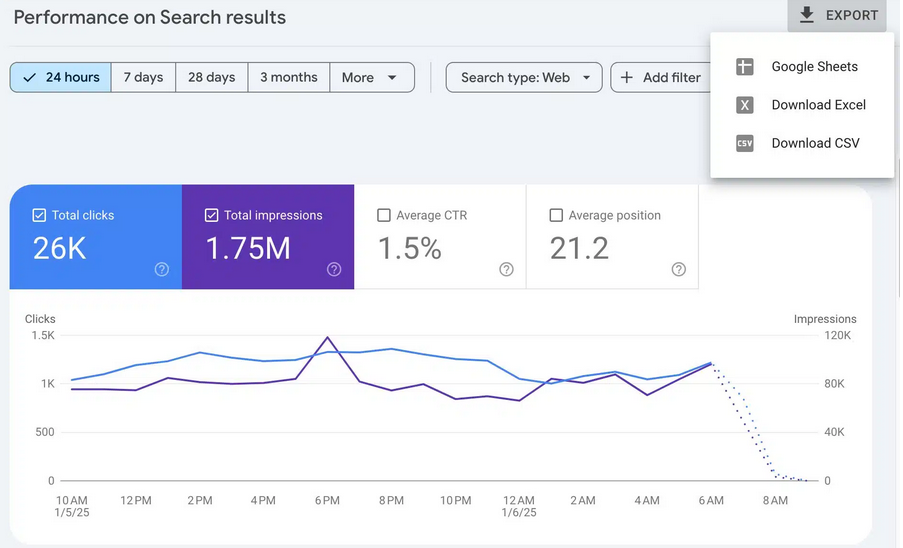
Screenshot from Google Search Console, January 2025
How to improve it:
- Rewrite titles to reflect outcomes, not features
- Add clarifying modifiers (“2026,” “for SaaS,” “step-by-step”)
- Match meta descriptions to actual on-page answers
- Avoid vague or generic phrasing
Primary data source:
Google Search Console
Average Position (Contextual, Not Absolute)
What it measures:
Mean ranking position across impressions.
Why it matters in 2026:
Average position only matters when paired with CTR and impressions. A stable position with declining CTR is a warning sign.
How to use it correctly:
- Track by page, not by keyword
- Compare position changes against content updates
- Ignore micro-fluctuations; look for sustained trends
What to avoid:
Optimizing content solely to move from position #6 to #5 without improving relevance.
Engagement Metrics (Behavioral Quality)
What it measures:
User interaction signals such as engagement time, scroll depth, and return visits.
Why it matters in 2026:
Search systems infer satisfaction from behavior patterns, not just links.
Key metrics to monitor:
- Engaged sessions
- Average engagement time
- Scroll depth (where available)
- Return frequency

Screenshot from Google Analytics, January 2025
How to improve them:
- Place the core answer above the fold
- Reduce unnecessary intros
- Use subheadings that mirror search questions
- Eliminate visual friction and layout clutter
Primary data source:
Google Analytics
Index Coverage & Crawl Health
What it measures:
Which pages are indexed, excluded, or crawled inefficiently.
How to improve it:
- Noindex thin or redundant pages
- Fix soft 404s and parameter traps
- Consolidate similar content
- Improve internal linking to priority pages
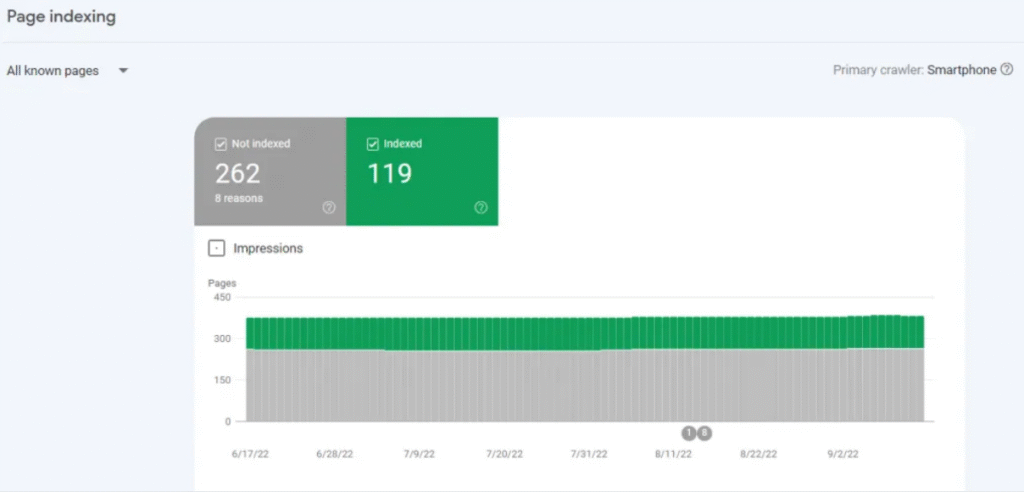
Screenshot from Google Search Console, January 2025
Why it matters in 2026:
Index bloat dilutes topical authority. Search engines reward focused, well-maintained indexes.
Metric to watch:
Indexed pages ÷ valuable pages (not total URLs)
Topical Authority Signals
What it measures:
How consistently your site covers a subject area in depth.
Why it matters in 2026:
Search engines and AI models rely on topic-level trust, not isolated keyword matches.
Indicators of strong topical authority:
- Multiple pages ranking for related queries
- Internal links forming clear topic clusters
- Consistent impressions growth across a theme
How to improve it:
- Build content clusters, not standalone posts
- Update cornerstone pages regularly
- Internally link from supporting articles to core pages
- Remove off-topic content that weakens focus
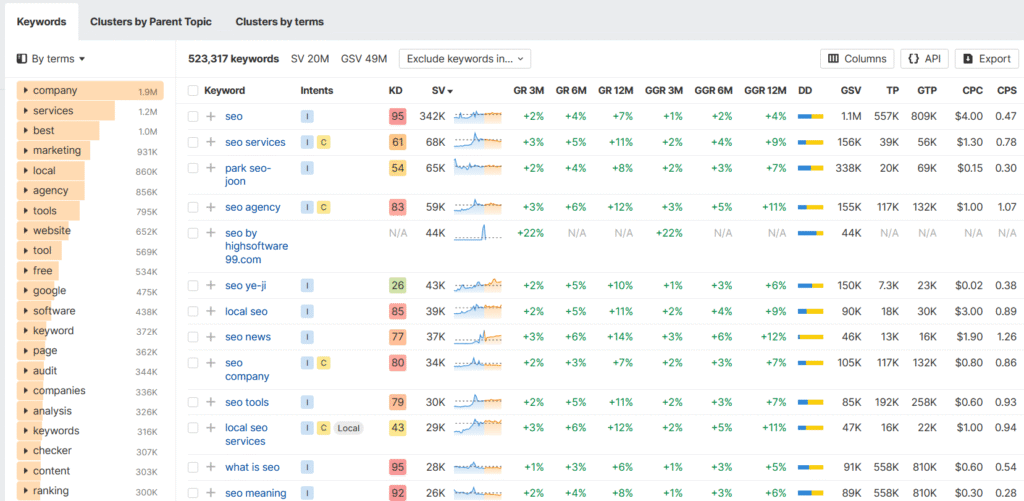
Screenshot from Ahrefs, January 2025
Branded Search Demand
What it measures:
Searches that include your brand name or product.
Why it matters in 2026:
Brand demand is a proxy for trust. AI-driven search surfaces brands users already recognize.
How to grow it:
- Publish authoritative, citation-worthy content
- Earn mentions on relevant industry sites
- Maintain consistent brand naming across platforms
- Invest in PR, not just link building
How to track:
Use Search Console query filters for branded terms.
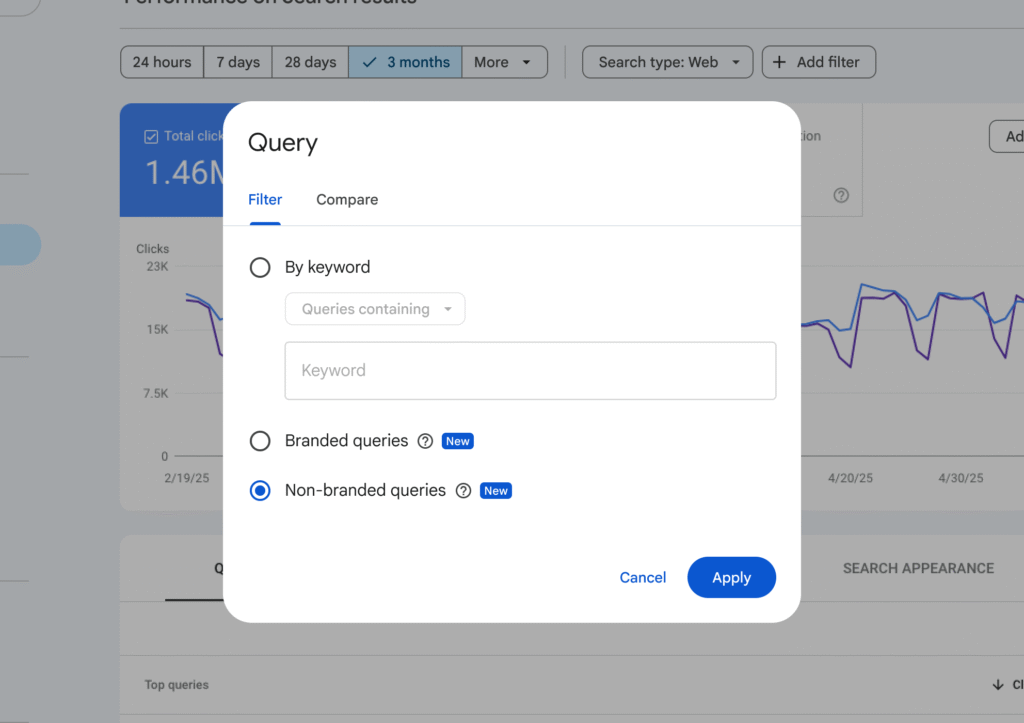
Screenshot from Google Search Console, January 2025
Backlink Quality (Context Over Count)
What it measures:
The relevance and credibility of linking pages, not raw link volume.
Why it matters in 2026:
Search engines discount links that lack topical alignment or editorial context.
What to prioritize:
- Links from pages with real traffic
- Contextual placement within relevant content
- Brand or natural anchors over exact-match anchors
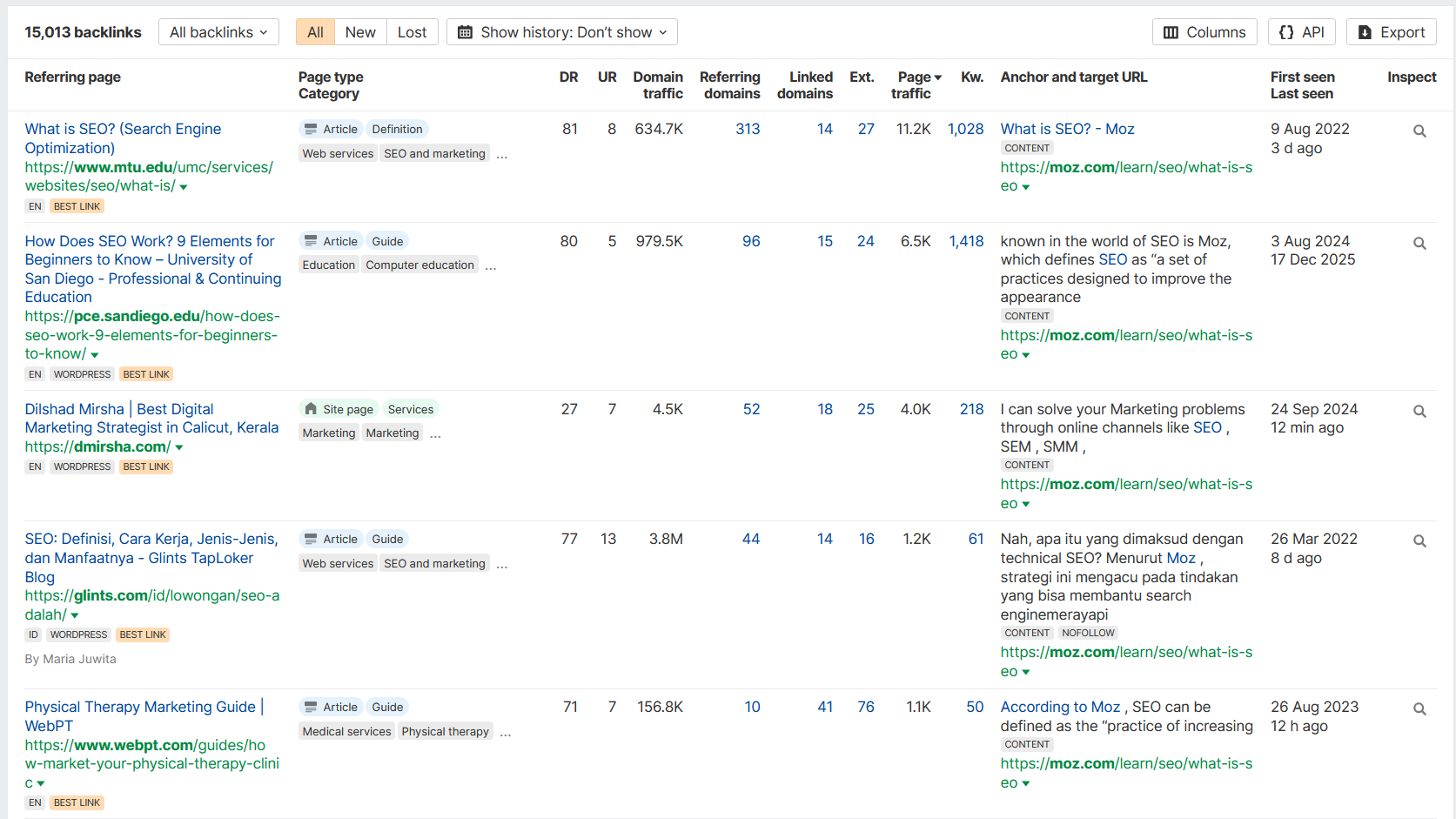
Screenshot from Ahrefs, January 2025
What to reduce:
- Sitewide links
- Irrelevant guest posts
- Links from pages with no ranking keywords
SEO Analytics Dashboard: What to Include
A practical SEO dashboard in 2026 should answer one question: Is this page earning and retaining trust?
Minimum dashboard components:
- Organic traffic by landing page
- CTR and impressions per page
- Engagement metrics (GA4)
- Index status and crawl errors
- Branded vs non-branded query split
- Referring page quality (not just domain metrics)
What Not to Over-Optimize Anymore
Stop over-focusing on:
- Daily keyword rank changes
- Site-wide bounce rate
- Total backlink count
- Vanity impressions with no clicks
These metrics create noise without improving decisions.
Final Takeaways
SEO analytics in 2026 is about interpreting intent signals, not chasing surface-level numbers.
Track metrics that:
- Reflect user satisfaction
- Demonstrate topical authority
- Indicate brand trust
- Show page-level performance
If a metric does not influence a content, technical, or strategic decision, it should not be in your dashboard.
Audit your current SEO reports and remove at least 30% of the metrics you track. Replace them with page-level performance and engagement indicators.
